Markets and community life in the winter Algarve
A winter in a small coliving house gets its community from a weekly routine, not from big events. Here is how one such week was built in the eastern Algarve from January to March 2026, from the Tuesday meeting to the Saturday market.
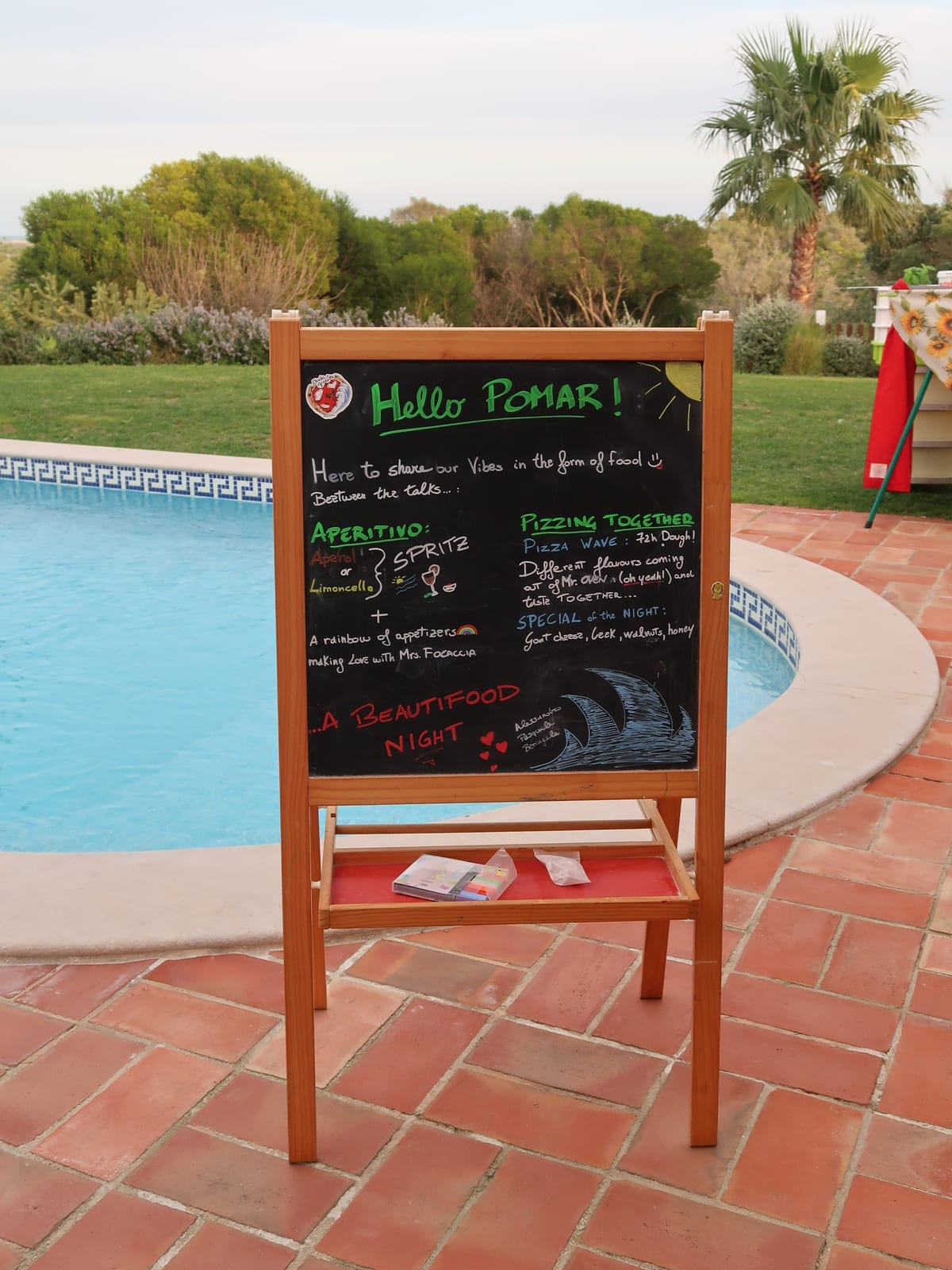
A good winter in a coliving house does not depend on big events. It depends on a weekly routine that brings the same people to the same table several times a week. From January to March in the eastern Algarve, that routine is easy to build. The working week stays free for work, and the community happens in small, regular pieces around it: a planning meeting, a shared dinner, a morning workout, a Saturday market and a Friday night out.
This guide follows one such winter week, as it ran at a coliving house in Fuseta between January and March 2026. It covers what happened inside the house, which local places carried the evenings and weekends, and how a group that changes every few weeks still becomes a community.
For dated festivals in the same months, such as carnival and the almond blossom, see the winter cultural calendar. This guide is about the ordinary week.
The shape of the week
Work runs Monday to Friday. Everything else fits around it. At Pomar na Praia in Fuseta, guests worked a normal working week, and the shared time sat before work, at lunch, after work and at the weekend. Guests in different time zones worked side by side without noise problems.
| Day | Fixed point | Where |
|---|---|---|
| Monday | Work week starts | House |
| Tuesday | Community meeting to plan the week | House |
| Weekdays | Morning runs, group workouts | House, beach |
| One evening | Family dinner | House |
| Weekdays | Market top-up | Fuseta market |
| Friday | Dinner and a night out | Faro |
| Friday–Sunday | Craft beer in the village | Fuseta |
| Saturday | Producers’ market | Olhão |
| Weekend | Coastal hikes, trips to other towns | Faro coast, Tavira |
Tuesday: the community meeting
Every week started with a community meeting on Tuesday. The group looked at the days ahead and agreed on dinners, workouts and weekend plans. It is a small habit, but it means nobody has to organise everything alone, and new arrivals know what is happening from their first week.
Pomar’s community manager posts a weekly programme for the house, with deep-work sessions, family dinners, surf trips and nights out1. Rentals, shared cars and weekend plans are arranged by the guests themselves on the house channel1.
The family dinner
The family dinner is the one fixed point of the week. Family dinners are one of the regular rhythms of every Pomar house1. In winter 2026 the house cooked Arroz de Marisco, the Portuguese seafood rice, in the first week and held a Mexican fusion dinner later in January. One morning in February the group came down to homemade bread for breakfast.
Workouts: the easiest way in
Group exercise did more for the group than almost anything else. The house provides gym equipment2, and in winter 2026 that meant kettlebells, mats and bands used outside in the garden. From the third week, the community manager ran regular community workouts in the garden, and in February the first workout on the beach. Some guests ran in the morning along the lagoon, and some tried CrossFit; Pomar points guests to a local CrossFit box in Olhão1.
The markets as a weekly errand
A market run is a social errand. Shopping for a shared dinner gives two or three people a reason to go out together on a Saturday morning.
- Olhão: the municipal markets are two brick buildings with corner towers on the waterfront, between the old town and the Ria Formosa. Fish is sold in the west building, fruit and vegetables in the east building3. On Saturday morning, small producers from the municipality add an open-air market outside with vegetables, herbs, homemade cakes and seasonal fruit34. The guests went every Saturday.
- Fuseta: the village has its own municipal market with fruit, vegetables, meat and fish from the local boats, open 07:00 to 13:005. It served for the mid-week top-up.
- Loulé: the municipal market hall opened in 1908 and is built in a revivalist style inspired by Arab architecture. It opens Monday to Saturday from 07:00 to 15:00, and on Saturdays a producers’ market fills the streets around it from 07:00 to 13:006. It is a longer trip from Fuseta and suits a weekend.
Inside the house: skill shares and small events
Most of the community life happened at home, and most of it cost nothing to organise.
- Skill shares. A local community member gave Portuguese lessons to the group in January.
- Movie nights. The terrace became a cinema on a cold, wet week in January, with a stack of blankets.
- Pizza parties. The house held its first pizza party in late February and closed the season with another one.
- Music. The group said goodbye to its first community manager with a homemade jam session and welcomed the next one with cake.
- The farm. Guests picked oranges and avocados on the host’s own farm in January and February. Pomar Coliving runs two farms outside Olhão: the apricot farm its base house stands on, and an orange and avocado farm nearby.
- Local causes. Some guests walked dogs from a local shelter.
Outside the house: places that carry the evenings
A small village needs one or two reliable places. In Fuseta that was Nanobrew, a craft beer bar that opened Friday to Sunday for about four hours in the evening and closed at nine during the stay. Guests went most weekends from late February. It is also where guests met people from the village.
Faro is the night out. On Fridays, and sometimes on a Thursday for a jam session, the group went into Faro for dinner and then to bars such as In’Verso and Madalena, where the house’s community manager played a DJ set one night in January.
Monthly street parties in Faro. Amar Surf Academy in Faro held a free neighbourhood street party once a month during the stay, with a live band, pizza and local craft beer. A guest from the house also had a first surf lesson with the same school.
Weekends. The group hiked the coast west of Faro several times, spent a Sunday in Tavira with the guests of another coliving, and went to a flea market and a pizza street party in Tavira in late January.
How a changing group still becomes a community
People arrive and leave every few weeks, so the community is never finished. In winter 2026 friends left in late January and early February, and new guests took their places. The routine is what carries the group through each change:
- The Tuesday meeting brings new people into the plan in their first week.
- The family dinner gives everybody one evening together, whatever their schedule.
- Group workouts create a shared habit that does not need conversation to start.
- A community manager keeps the programme running when the group changes.
The effect is easy to see when it stops. One guest moved to a hotel in the village for a week in March, when no room was free, and stopped doing proper workouts. Back in the house the next week, the routine returned.
Checklist for building your winter week
- Go to the first Tuesday meeting. It is the fastest way into the group.
- Say yes to the family dinner. It is the one evening when everybody is at the table.
- Join a group workout in week one. It is easier than starting a conversation.
- Make the Saturday market a shared errand. Olhão’s open-air market is on Saturday morning.
- Learn the opening days of your local places. Fuseta’s Nanobrew opened only Friday to Sunday during the stay.
- Plan one night out in Faro per week or two. Agree how everyone gets home before you leave.
- Offer a skill. A language lesson or a workout from a guest becomes part of the programme.
- Expect the group to change. Plan for goodbyes, and welcome the next arrivals.