Tavira
The pretty one, and the trade that comes with it.
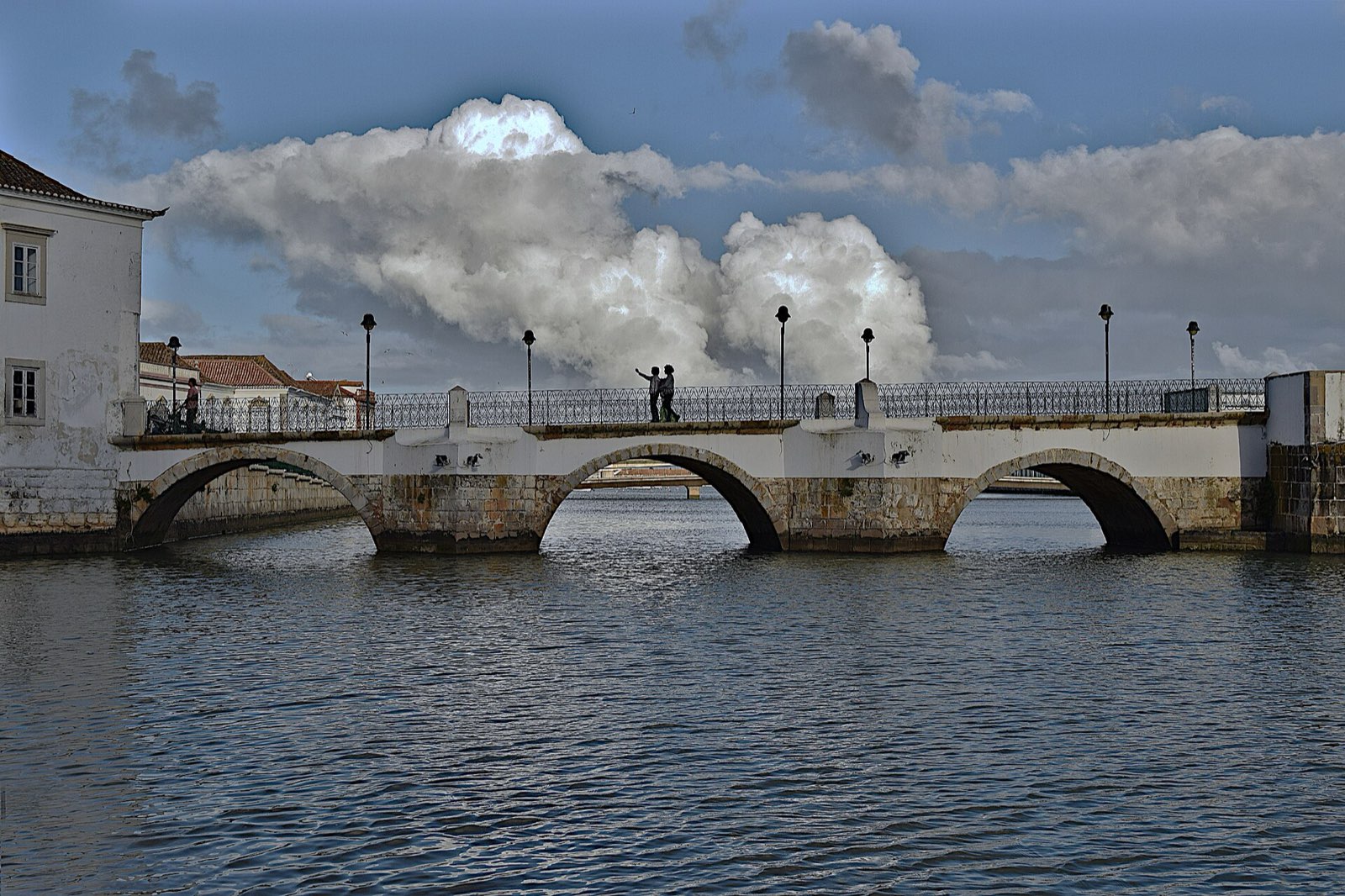

A river town with an old bridge, an island beach a short ferry ride off and a winter that thins out the restaurants but keeps its weekends.
A town built on both banks
About 13,000 people in the town, roughly 25,000 across the municipality, and the Gilão river running straight through the middle1. It has been called the Venice of the Algarve, which it did not ask for and cannot shake. The old bridge has seven arches and has been closed to cars since a flood in 19891, so the centre is a town you cross on foot, which is the correct speed for it.
It is obviously visitor-facing and easy to walk around: whitewashed houses and cobbled lanes. The old riverside market hall no longer sells anything fresh — it is shops and restaurants now. The real market is the municipal one, and the fish there sells out by mid-morning1.
The island, in winter too
Ilha de Tavira is the town’s beach, a short distance across the lagoon1. Unlike the crossing at Fuseta, it does not stop for the winter. The ferry operator’s timetable from late October lists sailings from both the town pier and Quatro Águas2. There are fewer boats and the day ends early, so a beach walk in January is a morning-and-lunch plan rather than a sunset one. Swimming is a separate question, and the answer in winter is mostly no.
On the line, and off it
Tavira sits on the Linha do Algarve between Faro and Vila Real de Santo António. Since the line was electrified, the regional trains run through to Lagos without the old change at Faro3. Fuseta, Olhão and Faro are all west along the same track; Vila Real de Santo António and the Spanish border are the other way.
That makes Tavira as easy to visit as it is to live in, and arguably easier. Pomar na Praia is in Fuseta, a short train ride west, and the arrangement works in that direction: live in the village, take the train to the pretty town at the weekend.
For anyone on a bicycle, the Ecovia do Litoral passes through. The cycle route crosses the whole Algarve coast, about 214 kilometres from Cape St. Vincent to Vila Real de Santo António, and its final stretch, out towards Cacela Velha, starts in Tavira4. It is part of EuroVelo 1, the Atlantic coast route4.
What winter is like
Quieter, and not shut. A share of the restaurants built for visitors close between November and March, while the ones that serve residents keep going. What survives is the weekend. In winter, guests from a coliving house in Fuseta spent a Sunday walking Tavira with another coliving group, and came back the following weekend for a flea market and a pizza street party. Two Tavira weekends in a row, in a month of storms.
Weekdays are slower, and the town is noticeably more its own.
Who it is wrong for
Anybody who wants a full winter inventory of open restaurants. Anybody who needs a town that functions without visitors in mind — Olhão does that, and is less pretty for it. And anybody planning a winter month around the sea: the beach is across the water, and in January the water is something you look at from the ferry.