Lagos
The end of the line, and a town that keeps going in winter.
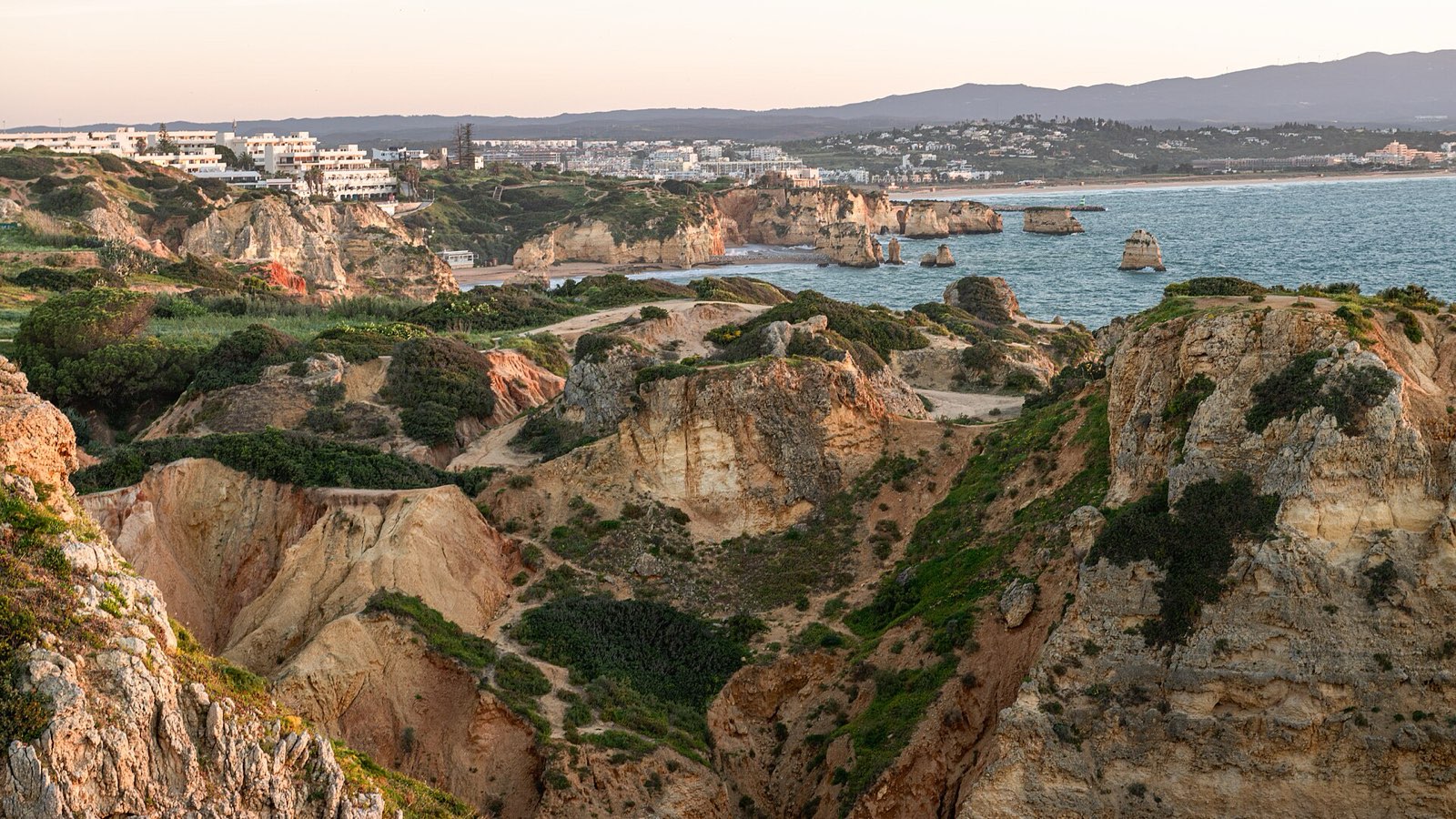

The western end of the coastal railway: a walled old town, a marina, the Ponta da Piedade cliffs, and a remote-worker crowd that arrives as summer leaves.
End of the line
Lagos is where the Algarve railway stops. Since the line went fully electric, trains run straight through to Vila Real de Santo António at the other end of the coast, ending a quarter of a century of changing at Faro1. More trains and shorter journeys, then. What did not change is the evening: the timetable was not extended, and the last departure still leaves before most restaurants have taken a dessert order2.
The bus terminal on the waterfront avenue covers the rest. Buses go east to Portimão and the airport, and west to Sagres and the Costa Vicentina, though the west-coast line takes weekends off and the airport bus thins out badly in winter3. Without a car, the western edge of the Algarve is a weekday project.
The old town and the water
Lagos sits at the mouth of the Bensafrim river and was a launch point for Portuguese voyages in the fifteenth century. Stretches of the sixteenth-century walls and the governor’s castle survive around the old quarter, along with the Igreja de Santo António, one of the few buildings to make it through the 1755 earthquake4. The streets inside the walls are cobbled and full of bars and restaurants. That will either delight or exhaust you.
Across the water, the marina has 474 berths and most of the boat trips in the area leave from it56. On Saturday mornings the Mercado de Levante sets up on the avenue next to the bus station, with produce, honey, bread and live poultry7. That is the closest the town comes to a weekly rhythm that belongs to residents.
Ponta da Piedade and the beaches
South of town, the coast turns into sandstone cliffs, sea stacks and caves. Boardwalks run along the top from Praia do Pinhão to Praia do Canavial, past Praia Dona Ana and the Ponta da Piedade lighthouse8. Then there is Meia Praia, the long bay backed by dunes6. It is full of surf schools9 and has room for everybody else.
The beach season runs from May to October, and July and August are the peak6. For surfing it is the other way round: late autumn to early spring is generally the useful window, and the reef at Porto de Mós does its work in winter9.
Winter
Lagos keeps its amenities open all year, unlike the smaller resort towns that practically shut, and its bars and restaurants stay open through the season10. The beaches empty and it is too cold to lie on them, but the town keeps going.
The remote workers arrive just as the tourists leave. A Lagos Digital Nomads community, founded in 2020, is active from mid-September to mid-May and holds events and coworking sessions in the town; many members leave when the season starts and come back in the autumn11. If you turn up in November, there are people to meet who are not on holiday.
Who it is wrong for
Anybody arriving in high summer expecting a quiet base. Anybody who wants a town that has not been found yet, because this one was found some time ago. And anybody planning evenings in Faro or the eastern villages: the railway connects Lagos to the whole coast, but not after dinner.